
2026-08-17 · Tom Reynolds
Common Electrical Issues During Kansas Winters
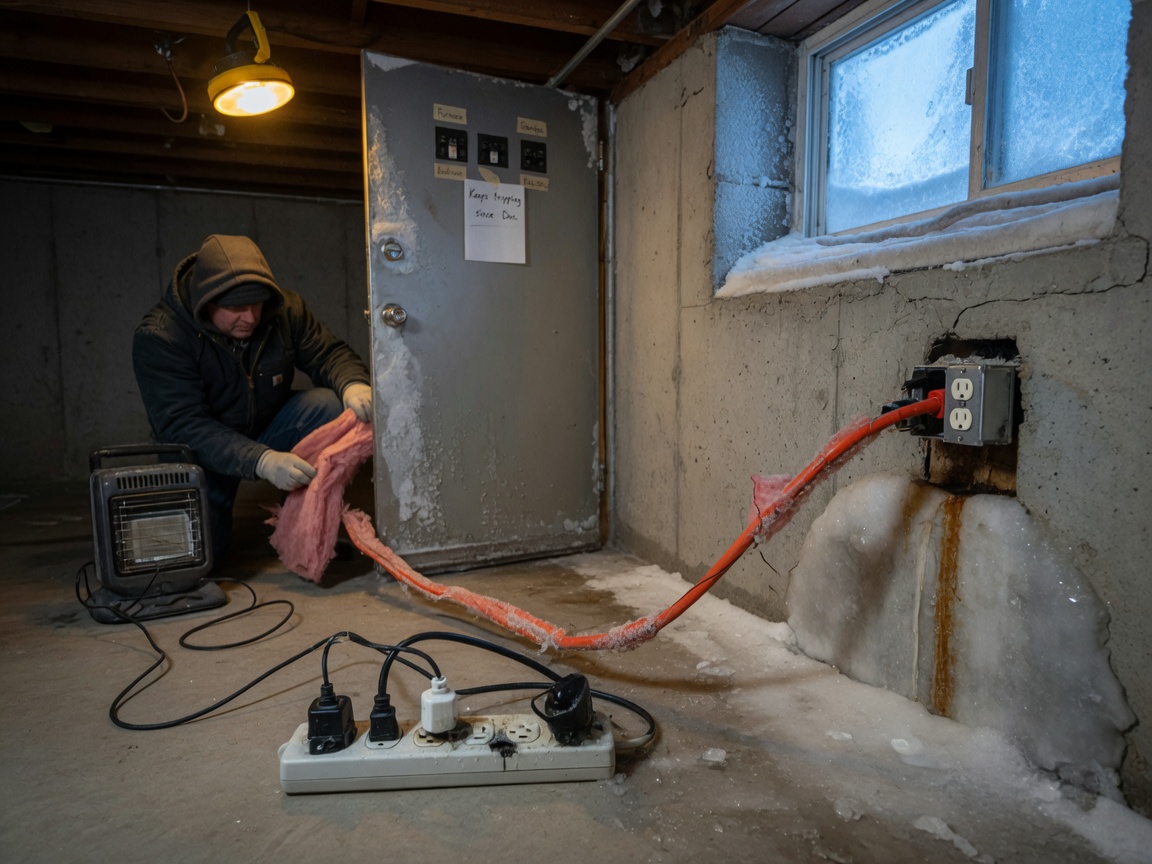
Wichita winters in Sedgwick County regularly push electrical systems when temperatures fall below freezing and homeowners rely on supplemental heating. Overloaded circuits from space heaters rank as the top issue, followed by moisture intrusion causing GFCI trips and occasional conduit damage from freeze-thaw cycles. These problems appear most often in homes built before 1980 where wiring capacity was never designed for modern loads.
Overloaded Circuits from Portable Heaters
Portable electric heaters draw 1,500 watts each, quickly exceeding the 15- or 20-amp rating on many bedroom and living-room circuits. In neighborhoods such as Delano and Old Town, older knob-and-tube or aluminum wiring cannot safely handle two or three units running simultaneously. Homeowners notice flickering lights, warm outlets, or breakers that trip within minutes of turning heaters on. Adding a single 1,500-watt heater to an already loaded circuit can raise temperature at the panel by 15–20 degrees, accelerating wear on breakers rated for 8–12 years of service. Running extension cords rated below 14-gauge compounds the risk because voltage drop generates additional heat. Checking the panel label for total amperage and avoiding daisy-chained power strips prevents most overload calls during the first cold snap of the season.
Moisture-Related GFCI and Outlet Failures
Cold air holds less moisture, yet indoor humidity spikes when furnaces run constantly and windows stay closed. This combination drives condensation into outdoor receptacles and garage GFCIs, especially around the Wichita Art Museum district and Planeview where many homes have attached garages exposed to north winds. A GFCI that trips repeatedly often indicates water inside the device rather than a true ground fault. Testing monthly with the built-in button reveals failures that standard outlets hide until a shock occurs. Replacing a single GFCI costs $120–$180 in parts and labor when scheduled during business hours, but after-hours rates climb when a tripped device leaves a refrigerator or medical equipment without power. Sealing outdoor covers with foam gaskets rated for -20 °F stops most winter moisture problems before they start.
Panel and Breaker Stress in Cold Weather
Main panels located in unheated basements or exterior walls experience temperature swings that cause metal bus bars to contract and loosen connections. In Eastborough and College Hill homes, 100-amp panels installed in the 1960s now serve added loads from electric vehicle chargers and tankless water heaters. Loose lugs create arcing that sounds like sizzling bacon and can trip the main breaker without warning. Thermal imaging during a cold snap shows hot spots 30–50 °F above ambient at these connections. Upgrading to a 200-amp panel through a licensed local electrician restores headroom and eliminates repeated service calls. Panels older than 25 years should be inspected before the first hard freeze rather than after the first outage.
When to Contact a 24 Hour Emergency Electrician
Persistent tripping after unplugging heaters, burning smells near the panel, or complete loss of power in multiple rooms requires immediate attention. Wichita homeowners can reach Emergency Electrician Services (24/7) or 24-Hour Electrical Repair Services for same-day response. For non-emergency planning, review What Wichita Homeowners Pay For After-Hours Electrical Calls to understand cost differences. Older homes in Riverside benefit from checking How To Spot Faulty Wiring In Older Wichita Houses before winter arrives. Scheduling service at 2502 S Glendale St during Mon–Fri 8am–6pm or Sat 9am–2pm keeps most issues from becoming overnight emergencies.