
2026-08-17 · Tom Reynolds
Local Rules For Electrical Work In Wichita Kansas
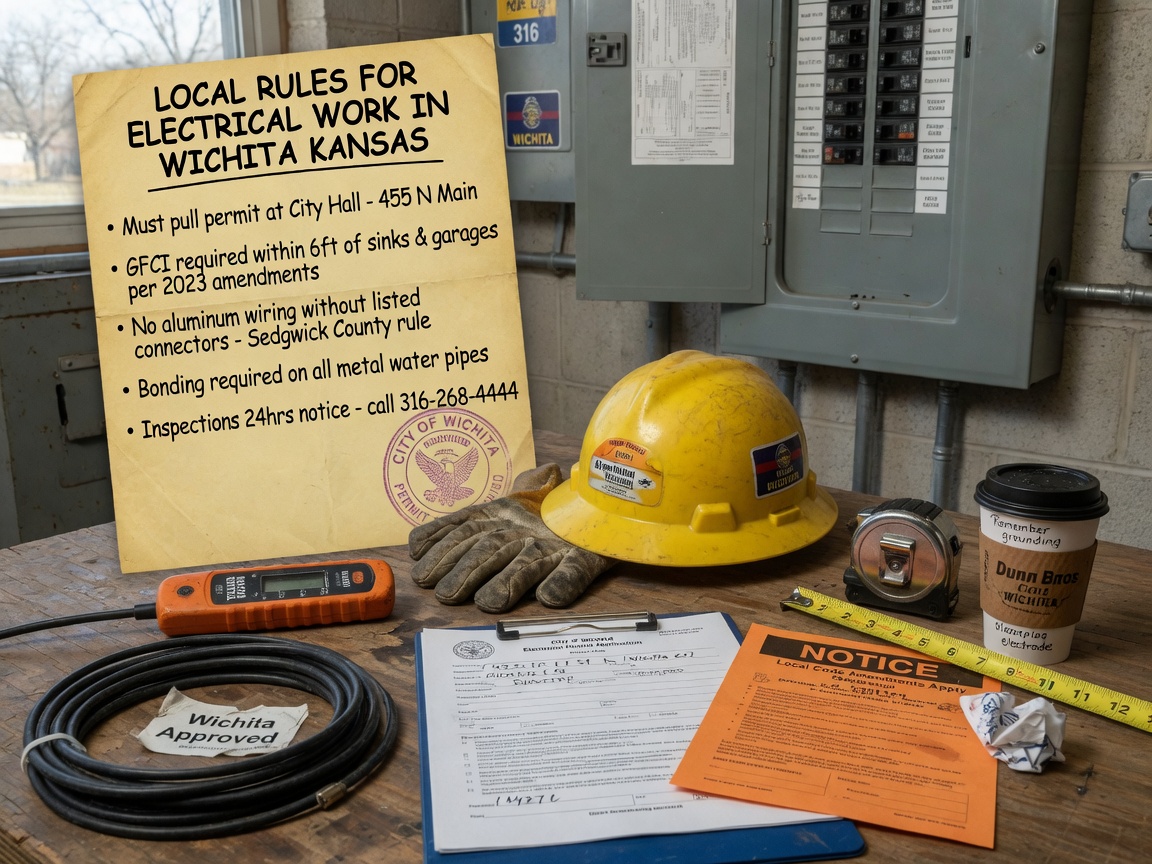
In Wichita, Kansas, electrical work typically requires a permit from the city or Sedgwick County for any project involving new circuits, panel changes, or modifications beyond simple replacements. This rule applies across areas such as Riverside, Delano, and Planeview to ensure safety amid hot humid summers and cold winters with tornado risk.
Permit Requirements in Sedgwick County
Sedgwick County mandates permits for installations that alter service capacity or add loads exceeding 20 amps. Minor tasks like swapping a single outlet often skip this step, yet any work tied to 200-amp service upgrades triggers review. Applications go through the city building department, with fees starting at $75 and processing in 3–5 business days. Homeowners in College Hill or Eastborough must submit plans showing wire gauge and breaker ratings before work begins. Failure to pull permits can halt projects during inspections and complicate future sales. The process verifies compliance with grounding standards that protect against lightning strikes common in Kansas storms.
Code Compliance for Severe Weather
Local amendments emphasize secure mounting and weatherproof enclosures to handle 70 mph winds during tornado season. Circuits in crawl spaces require GFCI protection where moisture from humid summers can corrode connections. In Planeview and Old Town, inspectors check for proper bonding of metal siding that could become energized. These rules reduce outage risks when winter temperatures drop below freezing and increase demand on heating systems. Proper labeling of panels with 120/240-volt ratings helps emergency responders during power failures. Compliance also covers surge protection devices rated for 50,000 amps to safeguard electronics from storm-related spikes.
Rules for Older Homes in Wichita Neighborhoods
Homes built before 1960 in Delano and Riverside often contain knob-and-tube wiring that must be replaced during renovations rather than repaired. How To Spot Faulty Wiring In Older Wichita Houses outlines visual checks for brittle insulation that violates current code. Any aluminum wiring additions require CO/ALR devices or full copper replacement. Inspectors enforce 6-inch wire tails at boxes and 12-inch spacing for supports. These standards prevent arcing in structures near the Wichita Art Museum or Exploration Place where historic preservation overlays add review layers. Upgrades must also accommodate modern loads from appliances drawing 15–20 amps continuously.
Inspection Process and Common Violations
After permit approval, rough-in and final inspections occur within 48 hours of request. Violations frequently involve undersized 14-gauge wire on 20-amp circuits or missing arc-fault breakers in bedrooms. Sedgwick County records show 30 percent of first inspections fail due to improper box fill calculations exceeding 40 cubic inches for certain devices. Corrections must be completed before service restoration. Common Electrical Issues During Kansas Winters details how frozen conduits lead to repeated failures. Documentation of all changes stays on file for 5 years, aiding property managers in College Hill who schedule annual reviews.
When to Consult Licensed Electricians
Complex jobs such as electrical panel upgrade service demand licensed professionals who understand Sedgwick County amendments. DIY attempts on service entrances risk fines up to $500 and void insurance coverage. Electricians verify load calculations using 80 percent continuous-use derating for circuits serving 3-ton AC units common in Wichita summers. They also ensure tornado-safe generator interlocks meet 30-amp transfer switch specs. This approach keeps work aligned with local rules while addressing real conditions in neighborhoods like Eastborough.